


College and university marketers work hard to create useful content that attracts prospective students, answers their questions and helps them make informed decisions. At the same time, paid media continues to evolve, creating new opportunities—and new responsibilities—for schools that want to place their stories in front of the right audiences.
Native advertising sits directly between those two worlds. It uses the format and rhythm of the surrounding platform, but it remains advertising and must be clearly identified as such. That distinction is what makes native advertising potentially effective, and what makes transparency so important.
So what exactly counts as native advertising, and why should higher education marketers care?
What Is Native Advertising?
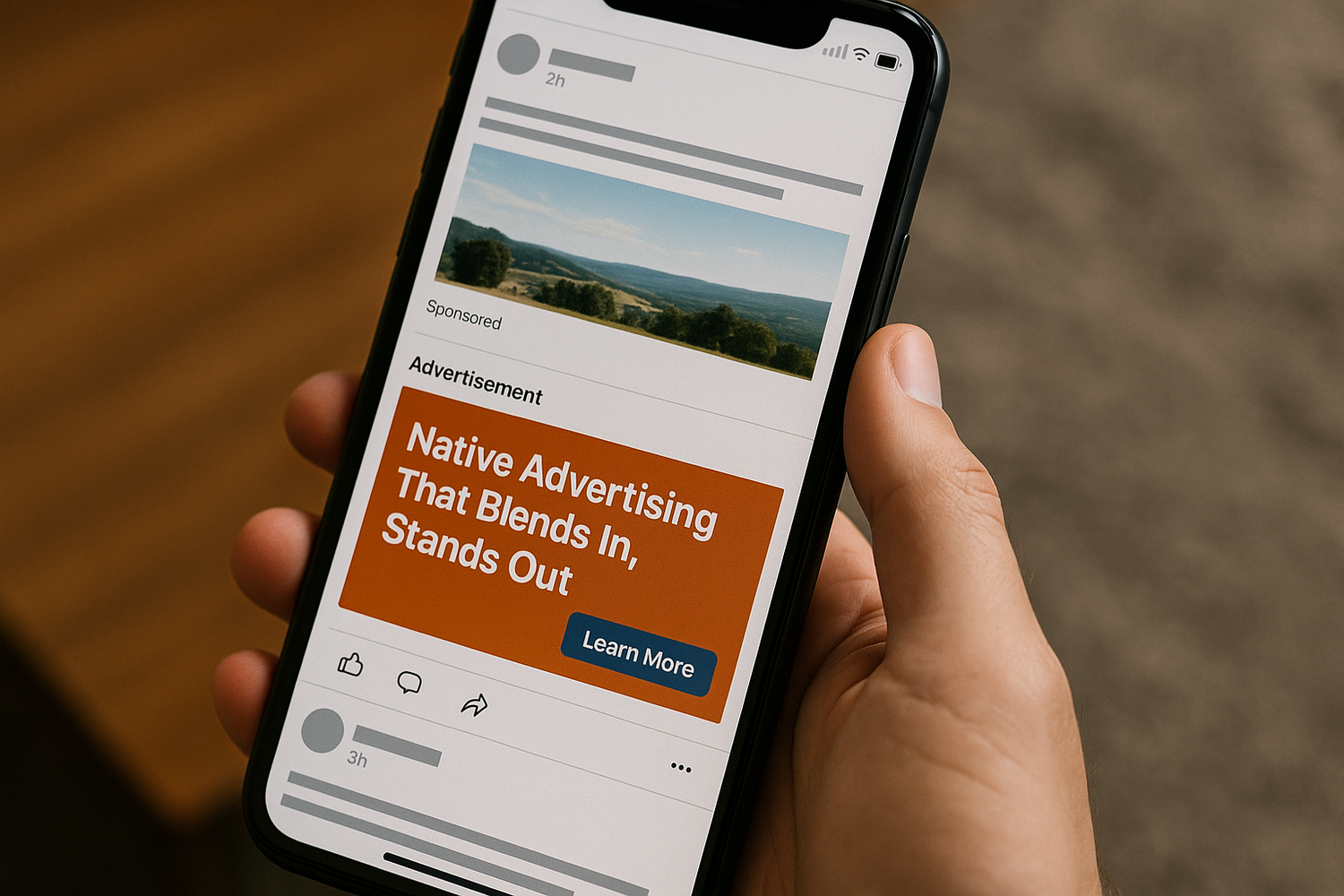
Native advertising is paid content designed to fit naturally within the environment where it appears. Instead of sitting apart from the page like a traditional banner, a native ad may resemble a social post, article recommendation, video, newsletter feature or publisher story.
Google describes native ads as advertisements that take on the format or tone of the website where they appear. The U.S. Federal Trade Commission uses a broader explanation: native advertising resembles the news, feature articles, product reviews, entertainment or other material surrounding it online.
In practical terms, native advertising can include:
- An in-feed sponsored post on LinkedIn, Instagram, Facebook, TikTok or another social platform
- A promoted article or newsletter post
- A sponsored story published with a news, education or industry outlet
- A paid video, podcast segment or creator collaboration
- A recommended-content placement that appears beside editorial articles
- A document, guide or report promoted within a professional network
The format changes from platform to platform, but the basic principle stays the same: the advertisement follows the form and function of the surrounding user experience.
Sponsored Content, Branded Content and Native Ads
These terms are often used interchangeably, but there are useful distinctions.
Sponsored content is usually produced or hosted by a publisher, creator or platform with financial support from an advertiser. A school might sponsor an article about changing careers, studying abroad or preparing for a profession, for example.
Branded content is created by or closely with the advertiser and distributed through another publisher or platform. The school has greater control over the message, but the commercial relationship must remain obvious.
In-feed native advertising is the most familiar form. It appears inside the normal flow of a platform. LinkedIn Sponsored Content, for example, currently includes single-image, video, carousel, document, event, article and newsletter formats that appear directly in members’ feeds.
A native format should blend with the platform’s design. It should never disguise who paid for the message or lead users to believe an advertisement is independent editorial coverage.
Why Should Higher Ed Marketers Care?
Here are three good reasons.
1. Native Ads Meet Prospects Where They Already Consume Content
Prospective students do not separate their days neatly into “research time” and “advertising time.” They discover programs while reading articles, watching videos, following professionals, exploring career options and scrolling through social feeds.
A useful native ad can enter that experience without forcing the user into an unrelated format. A business school might promote a faculty article in a professional feed. A language school might sponsor a destination guide. A college could distribute a career-change checklist or a student project story to an audience already interested in that field.
That does not mean native advertising will always outperform banners, search or other formats. The original version of this article cited dramatic performance claims that should not be treated as universal benchmarks. Results depend on the audience, platform, creative, placement, offer and landing-page experience. Native campaigns should earn their place in the media plan through testing.
2. Native Formats Now Extend Far Beyond a Single Sponsored Post
Native advertising was once discussed mainly in terms of promoted tweets and sponsored publisher articles. It now includes feeds, videos, carousels, documents, newsletters, creator content, recommendation widgets, podcasts and other formats designed around the experience of each channel.
This gives schools more room to match the format to the recruitment objective. A short video may introduce a learning environment. A document ad can offer a program guide. A sponsored article can address a complicated career or admissions question. A faculty-authored post can build awareness before a prospect is ready to inquire.
The opportunity is not simply to make an advertisement look like content. It is to create content worthy of the environment in which it appears.
3. Native Advertising Has Serious Ethical and Legal Dimensions
The closer an advertisement resembles editorial or peer-created content, the more important disclosure becomes.
The FTC states that consumers should be able to identify advertising before they decide to interact with it. Disclosures should be clear, prominent, easy to understand and placed close to the headline, image or other focal point. Labels such as “Ad,” “Advertisement,” “Paid Advertisement” or “Sponsored Advertising Content” are generally clearer than vague wording.
Canadian guidance follows the same basic principle. The Competition Bureau warns that online content is misleading when the commercial relationship is not made clear. Material connections should be disclosed visibly, in plain language and on every platform where the content appears.
For schools, the issue goes beyond compliance. Trust is fundamental to recruitment. Prospects should never have to discover halfway through an article that the institution paid for it.
What Does Responsible Native Advertising Look Like?
A good native campaign starts with a genuine audience need, not with the desire to disguise a sales message.
Before paying to distribute an article, video or social post, ask:
- Does the content answer a real question for the intended student audience?
- Is the sponsoring institution clearly identified before the user clicks or watches?
- Are program, tuition, accreditation, scholarship and career claims accurate and current?
- Does the content match the tone and expectations of the platform without imitating independent journalism?
- Is the next step relevant to the content rather than an abrupt sales pitch?
- Are captions, transcripts, image descriptions and readable disclosure labels provided?
- Will the disclosure remain attached when the content is shared, embedded or republished?
The landing page matters just as much as the ad. If a sponsored guide promises practical information but sends users to a generic homepage, the campaign breaks the trust it worked to create. The destination should continue the same topic, language and level of detail, with a clear next step such as exploring a program, attending an event, speaking with an adviser or downloading a guide.
Be Careful with Student, Alumni and Faculty Voices
Native campaigns often use student stories, alumni outcomes or faculty expertise because these voices can make the content more credible and useful. They can also create additional disclosure and accuracy responsibilities.
Participants should understand where the content will appear, that paid distribution may be involved and how long the institution intends to use it. Any material relationship with a creator, publisher or spokesperson should be disclosed. Employment, salary, licensing, admission and career claims should be verified and should not imply that an exceptional result is typical.
Artificial intelligence can help teams generate variations, summarize interviews or adapt creative formats. It should not fabricate a student, quotation, experience, outcome, faculty opinion or publisher endorsement.
How Should Schools Measure Native Advertising?
Clicks alone do not tell you whether native advertising is helping recruitment. A broader higher education paid advertising strategy should connect media results with meaningful recruitment outcomes.
At the platform level, review:
- Reach and qualified impressions
- Video views or document engagement
- Click-through rate and cost per landing-page visit
- Comments, shares and negative feedback
- Performance by audience, placement and creative
On the school website, review:
- Engaged sessions
- Program and admissions page visits
- Event registrations
- Guide downloads
- Adviser appointments
- Qualified inquiries and application starts
CRM and student-system data should then confirm whether those prospects progressed to applications, offers, deposits or enrollment. Use consistent campaign parameters and keep native advertising separate from organic content in reporting so paid distribution does not distort conclusions about editorial performance.
Native Advertising Is Not a Shortcut Around Trust
Native advertising can help colleges and universities place useful content in environments where prospective students are already reading, watching and learning. But its value does not come from hiding the advertisement. It comes from combining relevant content, appropriate placement, clear sponsorship and a credible next step.
The line in the sand should be simple: a native ad may fit naturally into its surroundings, but the audience should never be confused about who paid for it.
Has your school experimented with native advertising? Which formats have produced useful engagement without compromising transparency?
Frequently Asked Questions About Native Advertising
What is native advertising in higher education?
Native advertising is paid school content designed to match the format and experience of the platform where it appears, such as a sponsored social post, publisher article, video, document or newsletter placement.
Is sponsored content the same as native advertising?
Sponsored content is one type of native advertising. Native advertising also includes in-feed ads, content recommendations, promoted videos, documents and other paid formats that fit within a platform’s normal experience.
Does a native ad need a disclosure?
When users might not otherwise recognize the content as advertising, the commercial relationship should be disclosed clearly and prominently before they interact with it. Requirements vary by jurisdiction, so schools should also review local legal guidance.
Which disclosure wording is best?
Plain labels such as “Ad,” “Advertisement,” “Paid Advertisement” or “Sponsored Advertising Content” are generally clearer than ambiguous expressions. The disclosure should be visible, understandable and close to the content it describes.
Can schools use student testimonials in native advertising?
Yes, provided the student gives informed permission, the experience is genuine, material connections are disclosed and the content does not make unsupported claims or present exceptional outcomes as typical.
How should a school measure a native campaign?
Measure both media engagement and recruitment progression. Connect platform data with website analytics, CRM records and enrollment outcomes rather than judging the campaign by clicks alone.


