


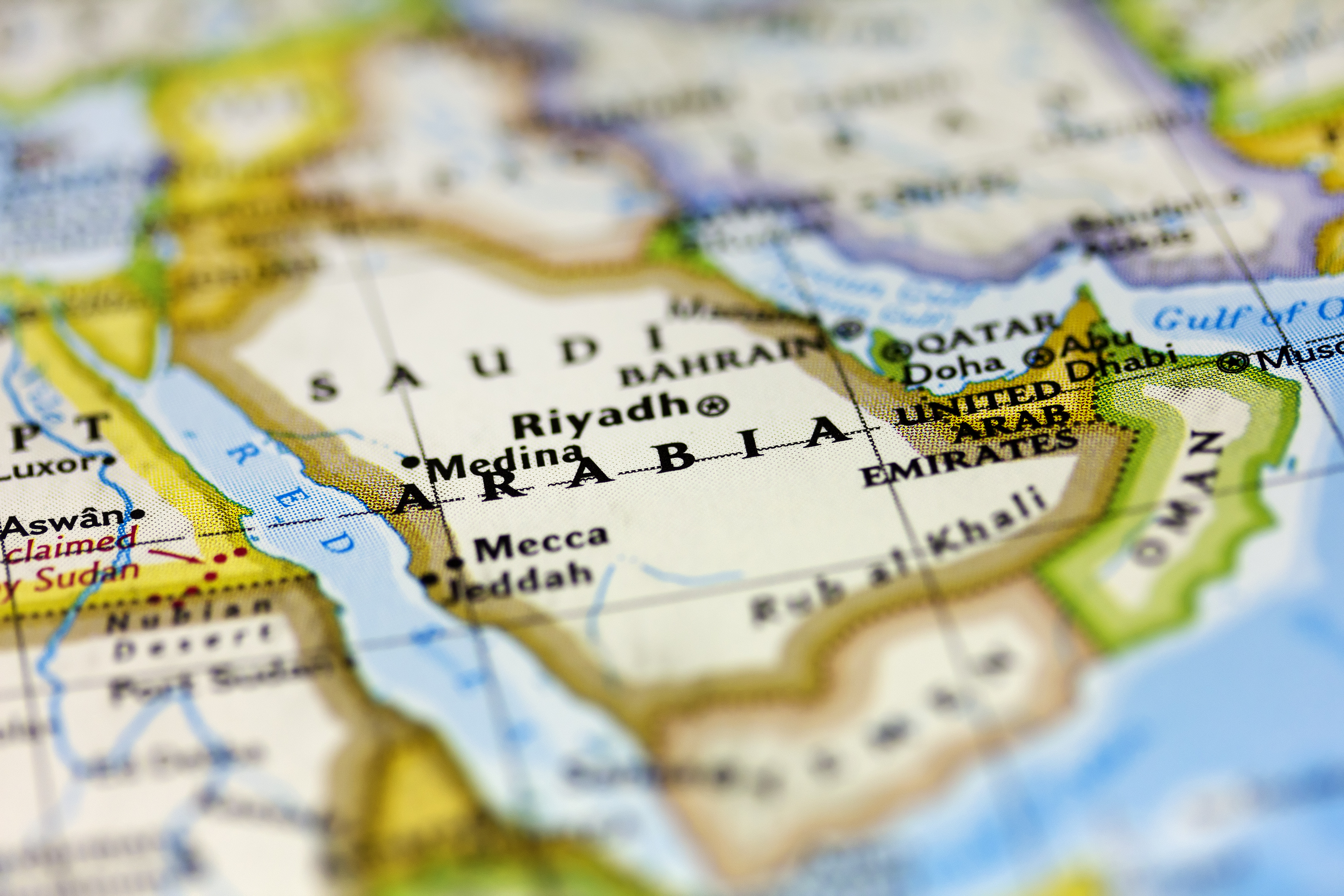
What is the first thing that comes to mind when you think of Saudi Arabia? If you said oil, you would not be alone. Yet that familiar answer now tells only part of the story.
Saudi Arabia is pursuing a broad economic and social transformation under Vision 2030, with education, research, workforce development, technology and human capability playing central roles. For colleges and universities outside the Kingdom, this means that Saudi Arabian student recruitment remains an important opportunity—but one that looks very different from it did a decade ago.
The market is no longer defined by one scholarship program, a short list of destination countries or a single group of undergraduate applicants. Institutions may encounter government-sponsored students, self-funded applicants, graduate researchers, health professionals, executives, short-program participants and students seeking highly specialized qualifications. At the same time, stronger domestic universities, new international partnerships and Saudi Arabia’s effort to attract students into the Kingdom are changing the competitive landscape.
A successful strategy therefore begins with a current understanding of the programs, funding routes, approval requirements and student needs that shape each applicant’s journey.
A More Selective International Education Market
The King Abdullah Scholarship Program was the dominant feature of Saudi student mobility when this article was first published. Today, institutions should refer instead to the current Custodian of the Two Holy Mosques Scholarship Program and verify its requirements directly through Saudi Ministry of Education sources.
The Ministry’s current scholarship application service lists several routes, including the Pioneers, Imdad, Excellence, Research and Development, Training Scholarship and Health Agreements tracks. Eligibility and approved institutions differ by route. Current general conditions include direct and unconditional admission to an approved institution and specialization, regular study at the institution’s main location and compliance with the program’s academic and administrative requirements.
The scholarship strategy announced in 2022 linked outbound study more explicitly with Saudi Arabia’s Human Capability Development Program and labour-market priorities. The Ministry stated an ambition to send 70,000 students to leading international education and training institutions by 2030. It also moved away from the assumption that every student would complete lengthy English preparation abroad, with greater emphasis placed on language preparation inside Saudi Arabia before departure.
For recruiting institutions, this creates three practical lessons:
- Scholarship eligibility should never be assumed from nationality alone.
- Program, institution, campus and funding approval must be checked for the relevant track and intake.
- Marketing should not promise funding, sponsorship or institutional approval before the student has received an official decision.
Government sponsorship is also not the whole market. Saudi Arabia maintains an official process for students seeking permission to study abroad on their own account. Some applicants may be fully self-funded, supported by an employer, funded through another government body or combining personal and institutional resources.
This makes it important to segment Saudi prospects by funding route, degree level, subject, intended intake, language readiness and application stage rather than placing every inquiry into a single scholarship-focused campaign.
Recruiting in Saudi Arabia
Before investing in advertising, institutions should determine whether they offer programs that genuinely fit the market. National transformation priorities can provide useful context, but they do not prove demand for every program or campus.
Review the institution’s own Saudi inquiry, application, offer, funding, visa, enrollment and retention data. Then examine each priority program in relation to:
- Current scholarship tracks and approved fields
- Academic entry requirements and Saudi qualification equivalencies
- English or other language requirements
- Tuition, living costs and available financial support
- Program duration and intake flexibility
- Research, professional and industry relevance
- Recognition or licensing considerations after graduation
- Housing, family, health and student-support capacity
Institutions targeting the United States can also work with current official networks. EducationUSA Jeddah, for example, provides objective guidance to students and families and welcomes contact with accredited U.S. universities. The Saudi Arabian Cultural Mission continues to publish information on institutions and language programs serving Saudi students in the United States.
Education agents, school counsellors, alumni and local partners may also contribute, but they should complement rather than replace the institution’s strategy. Partner reviews should cover ownership, references, staff training, sub-agents, marketing claims, student fees, commissions, privacy, document handling, complaints and termination procedures.
No representative should guarantee admission, scholarship approval, a visa, employment or permanent residence. Applicants should be able to confirm whether an agent or partner is officially authorized by the institution.
Create a Complete Arabic and English Decision Journey
Saudi students may research in Arabic, English or both. A bilingual campaign makes sense only when the language remains consistent after the advertisement.
A strong Arabic journey may include:
- Program summaries and learning outcomes
- Entry requirements and accepted Saudi qualifications
- Scholarship and self-funded applicant guidance
- Tuition, fees, deposits and refund conditions
- Housing, health insurance and estimated living costs
- Application documents and certified-translation requirements
- Visa steps linked to official destination-country guidance
- Academic culture, assessment and integrity expectations
- Student support and pre-arrival information
- A named adviser or reliable Arabic-language contact route
Do not send an Arabic advertisement to an English-only form, confirmation page and email sequence. Forms should support right-to-left display correctly, and translated pages should be reviewed by a qualified Arabic-language professional familiar with education terminology.
Machine translation can assist with a first draft, but it should not determine admissions requirements, financial terms, scholarship guidance, visa information or contractual language. Every high-stakes page needs an owner and review date.
Families may influence the decision for some students, particularly when a program requires major financial or geographic commitment. Optional Arabic information sessions for parents or sponsors can help explain costs, safety, housing, academic expectations and support. The student should still remain at the centre of the process.
HEM’s guide to designing an international student recruitment website provides a broader framework for connecting localized content with admissions, accessibility, performance and CRM follow-up.
Social Media Marketing
Saudi Arabia remains a highly connected, mobile-first market, but platform decisions should no longer be based on statistics from a decade ago.
Digital 2025: Saudi Arabia estimated internet penetration at 99% at the beginning of 2025 and reported large advertising audiences across YouTube, Snapchat, Instagram, X, Facebook and LinkedIn. These figures are useful directional indicators, but advertising reach estimates are not the same as unique active users or qualified prospective students.
Choose channels by testing where each target segment actually researches programs and progresses. Useful formats may include:
- Arabic and English paid search for high-intent program queries
- Short videos explaining programs, laboratories, studios and student support
- Live or recorded sessions with admissions staff and faculty
- Current student and alumni stories used with informed permission
- Scholarship and application webinars
- Permission-based email and messaging follow-up
- Education fairs, school partnerships and official advising networks
Each campaign should lead to a relevant page rather than a generic homepage. The message, language, program, intake and next action should remain consistent from the advertisement through the form and admissions response.
Content should also be tested on mobile devices and realistic connection speeds. Captions, transcripts, image descriptions and accessible forms allow more people to use the information and make campaign assets easier to understand without sound.
Measure qualified progression by channel instead of optimizing only for impressions, video views or inexpensive inquiries. A platform that generates attention but few completed applications may not deserve more budget.
Cultural Considerations
Cultural preparation should begin with curiosity and current evidence, not a checklist of national traits. Saudi applicants differ by region, age, education, professional experience, family circumstances, language proficiency, funding route and previous international exposure.
Institutions should avoid assuming that every Saudi student:
- Has the same family decision structure
- Is government sponsored
- Needs the same level of English support
- Prefers the same social platform
- Has identical religious, housing or dietary needs
- Will respond to the same prestige or career message
Instead, ask current students, alumni, non-enrolling applicants and admissions advisers what information and services matter. Practical support may include:
- Clear academic and classroom expectations
- Writing, citation and academic-integrity guidance available to all international students
- Prayer-space and halal-food information
- Housing options for individuals, couples or families
- Health insurance and healthcare navigation
- Ramadan and religious-holiday considerations
- Arabic-speaking support where feasible
- Wellbeing, disability and discrimination-reporting resources
- Career and alumni services described without guarantees
Orientation should explain how to access services, communicate with instructors, request accommodations, understand assessment and seek help. It should not frame students as problems to be corrected or make one nationality responsible for issues that can affect any international cohort.
Current students and alumni can provide valuable peer insight, particularly about arrival, housing, classroom adjustment and community. Participation should be voluntary, and institutions should obtain clear permission before publishing names, photographs, testimonials or contact details.
Partnerships and Opportunities
Saudi Arabia should no longer be viewed only as a source of students leaving the country. It is also developing its own higher education and research capacity, attracting international students and expanding partnerships with institutions abroad.
In 2024, the Saudi Ministry of Education emphasized student and faculty exchange, research collaboration and joint degree programs in discussions with U.S. higher education leaders. The Ministry also reported strong international interest in the Study in Saudi Arabia platform. These developments create opportunities that go beyond a conventional recruitment campaign.
Potential models include:
- Articulation and transfer agreements
- Joint or dual degree programs
- Research and faculty collaboration
- Short academic and professional programs
- Executive and leadership education
- Health, technology and industry training
- Exchange and study-abroad programs
- Online or hybrid learning with clear recognition and support
Partnerships require academic ownership and long-term governance. Define responsibilities for curriculum, admissions, quality assurance, faculty, student support, data, finance, marketing, complaints and outcomes before promoting the opportunity.
The most sustainable relationships are built around a clear academic or workforce need rather than a one-time event. HEM’s international student recruitment action plan can help institutions connect market research, program selection, partnerships, digital recruitment and enrollment operations.
Measure the Full Recruitment Journey
Saudi recruitment should not be judged by website traffic or inquiry volume alone. Track the full progression from discovery to successful study.
Useful measures include:
- Relevant Arabic and English website visits
- Webinar and advising registrations
- Valid and contactable inquiries
- Applications started and completed
- Academic and language documents verified
- Offers and offer acceptance
- Scholarship or funding status where lawfully recorded
- Deposits and successful payments
- Visa outcomes and deferrals
- Arrivals, registration and first-term retention
Operational measures are just as important:
- Response time by language and channel
- Missing-document rate
- Scholarship-related questions and delays
- Payment failures
- Agent complaints
- Translation or information errors
- Housing and pre-arrival support requests
Separate scholarship-funded and self-funded results. Compare performance by program, intake, degree level, campaign and partner, and avoid drawing broad conclusions from very small cohorts.
A recruitment campaign is not truly successful when it generates interest. It is successful when qualified students can obtain accurate information, complete the process, enroll with realistic expectations and receive the support needed to progress.
Frequently Asked Questions
Is Saudi Arabia still an important international student recruitment market?
Yes, but institutions should evaluate the opportunity by program, scholarship route, cost, destination, academic fit and historical enrollment results. Saudi Arabia is not one uniform market, and government sponsorship should never be assumed for every applicant.
What replaced the King Abdullah Scholarship Program?
The current framework is the Custodian of the Two Holy Mosques Scholarship Program. Its application service includes several tracks with different objectives and requirements. Institutions and applicants should verify current approved programs, institutions and conditions directly with the Saudi Ministry of Education.
Do all Saudi applicants receive government funding?
No. Applicants may be scholarship funded, self-funded, employer supported or sponsored through another organization. Recruitment forms and CRM records should distinguish funding routes without promising that a student will receive support.
Should institutions create Arabic recruitment content?
For targeted Saudi campaigns, Arabic content can reduce uncertainty around programs, requirements, costs, scholarships, documents, housing and support. The strongest approach continues the language through forms, confirmations, key emails and adviser access.
Which social platforms are best for recruiting Saudi students?
There is no universal answer. YouTube, Snapchat, Instagram, X, LinkedIn, search and messaging channels may all be relevant, depending on the audience and program. Institutions should test qualified inquiries, applications and enrollments rather than selecting channels only from national popularity figures.
What support matters after a Saudi student enrolls?
Useful support may include orientation, academic-language and writing assistance, housing guidance, healthcare navigation, prayer and halal information, wellbeing services, accessibility support, career services and a clear way to report discrimination or request help.
How should Saudi recruitment performance be measured?
Track qualified inquiries, applications, verified documents, offers, funding status, deposits, payments, visa progression, arrivals, enrollment and retention. Review operational measures such as response time, missing documents, payment problems and partner complaints as well.
Understanding the Market Means Continuing to Learn
Saudi Arabia continues to offer meaningful opportunities for international education, but the strongest strategies will not rely on the assumptions that shaped recruitment a decade ago.
Institutions should verify current scholarship rules, understand self-funded applicants, build complete Arabic and English journeys, choose channels from evidence, prepare student support and explore partnerships that align with Saudi Arabia’s evolving education and workforce priorities.
Most importantly, they should listen to Saudi students themselves. Their questions, decisions and experiences provide a far better foundation for recruitment than old destination rankings or cultural generalizations.
Institutions evaluating the market can also review HEM’s broader guidance on recruiting students across the Middle East and North Africa and its international student recruitment services.
How has your school approached Saudi Arabian student recruitment, student support or academic partnerships?


