


Schools already possess one of the most valuable resources for creating original content: their own institutional expertise.
Instructors understand which concepts students struggle with. Program directors know how their disciplines are evolving. Admissions specialists recognize the application questions that cause confusion. Career services teams understand the challenges students face when preparing for employment.
Yet much of this knowledge remains in classrooms, meetings, and individual conversations rather than reaching prospective students. As a result, higher education content marketing can become overly dependent on keyword research and general information already available across competing websites.
Schools have an opportunity to do something more useful. By interviewing faculty and institutional specialists, verifying their insights, and presenting them in accessible language, marketing teams can create content grounded in genuine experience.
This approach also aligns with Google's emphasis on helpful, original, people-first content. The challenge is developing a repeatable editorial process that captures expertise, establishes credibility, and connects useful information to students' program decisions.
What Does E-E-A-T Mean for Higher Education Content?
E-E-A-T stands for Experience, Expertise, Authoritativeness, and Trustworthiness.
For schools, each principle has a practical application:
- Experience: First-hand knowledge from instructors, admissions advisors, placement coordinators, or other institutional specialists.
- Expertise: Subject knowledge developed through academic qualifications, teaching, research, or professional practice.
- Authoritativeness: Credibility supported by recognized qualifications, institutional expertise, research, and reliable sources.
- Trustworthiness: Accurate information, transparent attribution, appropriate evidence, and clearly communicated limitations.
Importantly, E-E-A-T SEO is not about achieving a particular score.
Google explicitly states that E-E-A-T is not a standalone ranking factor. Its ranking systems use multiple signals to identify helpful, reliable content demonstrating these qualities. Adding a professor's biography to an otherwise generic article does not automatically make it authoritative.
For example, simply adding a professor's name to an article about preparing for nursing school offers minimal benefit if the piece merely repeats standard study advice. However, an instructor explaining which foundational skills students frequently struggle with, and why those skills matter in clinical training, offers practical insight that can inform an applicant's preparation.
That distinction matters. E-E-A-T for higher education should be reflected in the substance of the content, not just its presentation.
Schools should ask:
Who genuinely understands this question, what can they contribute, and how can we substantiate their claims?
That question provides a stronger foundation for E-E-A-T content than superficial author attribution.
Turn Faculty Expertise Into Content Students Can Trust
Build a clearer process for expert insight, evidence and review.

Which Student Questions Are Worth Taking to a School Expert?
Not every article requires a faculty interview. An application deadline page primarily needs accurate institutional information and a responsible admissions owner. Expert input becomes more valuable when a question requires interpretation, professional experience, or subject-specific context.
Consider these examples:
- What skills should students develop before beginning a cybersecurity program?
- How is artificial intelligence changing digital marketing careers?
- What should applicants include in a design portfolio?
- How does work-integrated learning prepare students for employment?
- Which mathematics concepts should students review before studying engineering?
- What do international applicants commonly misunderstand about admissions requirements?
- How should students choose between two related healthcare programs?
Each question creates an opportunity to offer insight beyond a generic explanation.
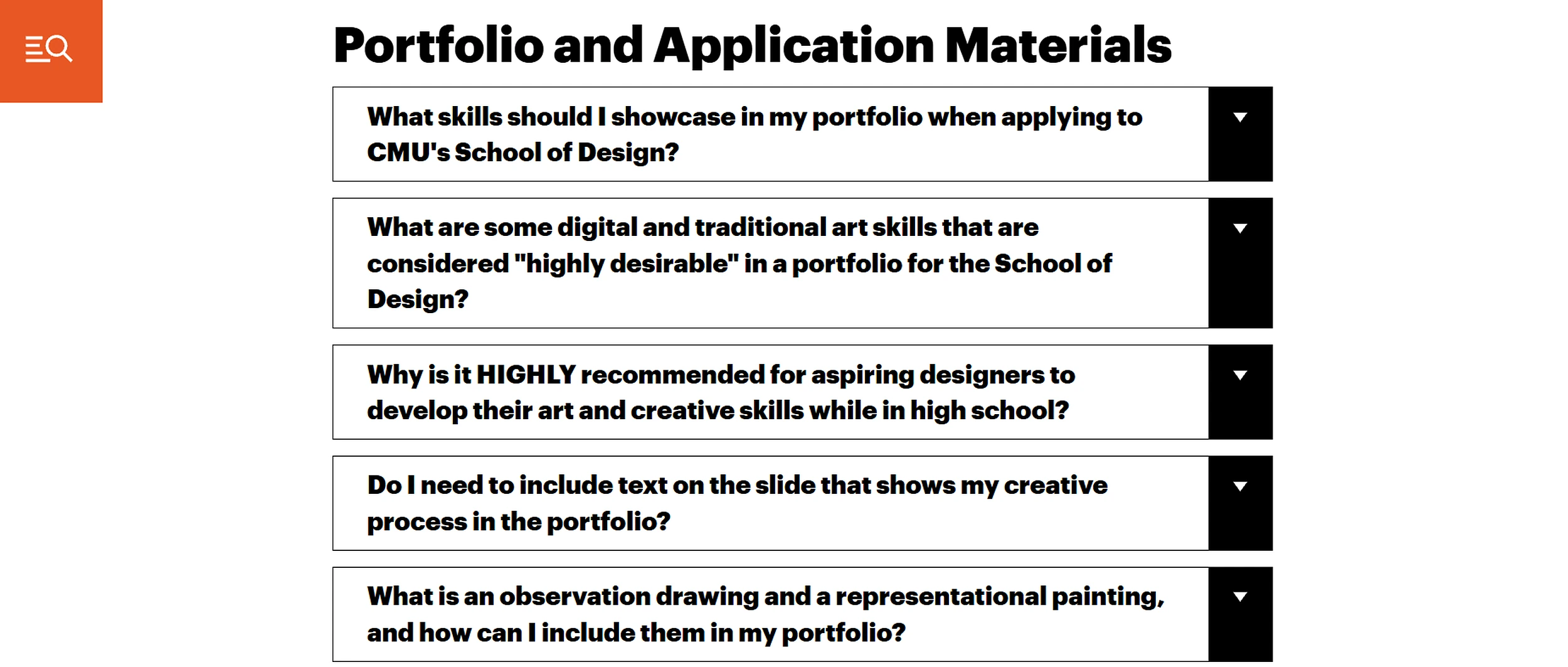
Carnegie Mellon University's School of Design shows how expert knowledge can make this type of content more useful. Its admissions FAQ explains what design faculty look for in portfolios, including foundational skills, creative potential, independent work where applicants have had that opportunity, process, and fit with the curriculum. Rather than offering generic portfolio advice, the guidance reflects the criteria faculty actually use when evaluating applicants.
How Can Schools Identify These Questions?
Marketing teams can find promising topics by reviewing admissions inquiries, information-session questions, program-page searches, and feedback from recruitment staff. For example, if prospective students repeatedly ask whether programming experience is required for a cybersecurity diploma, that question may deserve an instructor-led article explaining expected preparation, introductory coursework, and available learning support.
Search keyword data can establish demand, while admissions feedback identifies what students actually need clarified. A useful editorial test is: Could a general content writer produce essentially the same article without consulting anyone at the institution?
If the answer is yes, the article may need a more specific angle. An instructor's classroom observations, a program director's curriculum insights, or an admissions specialist's experience can provide that additional value.
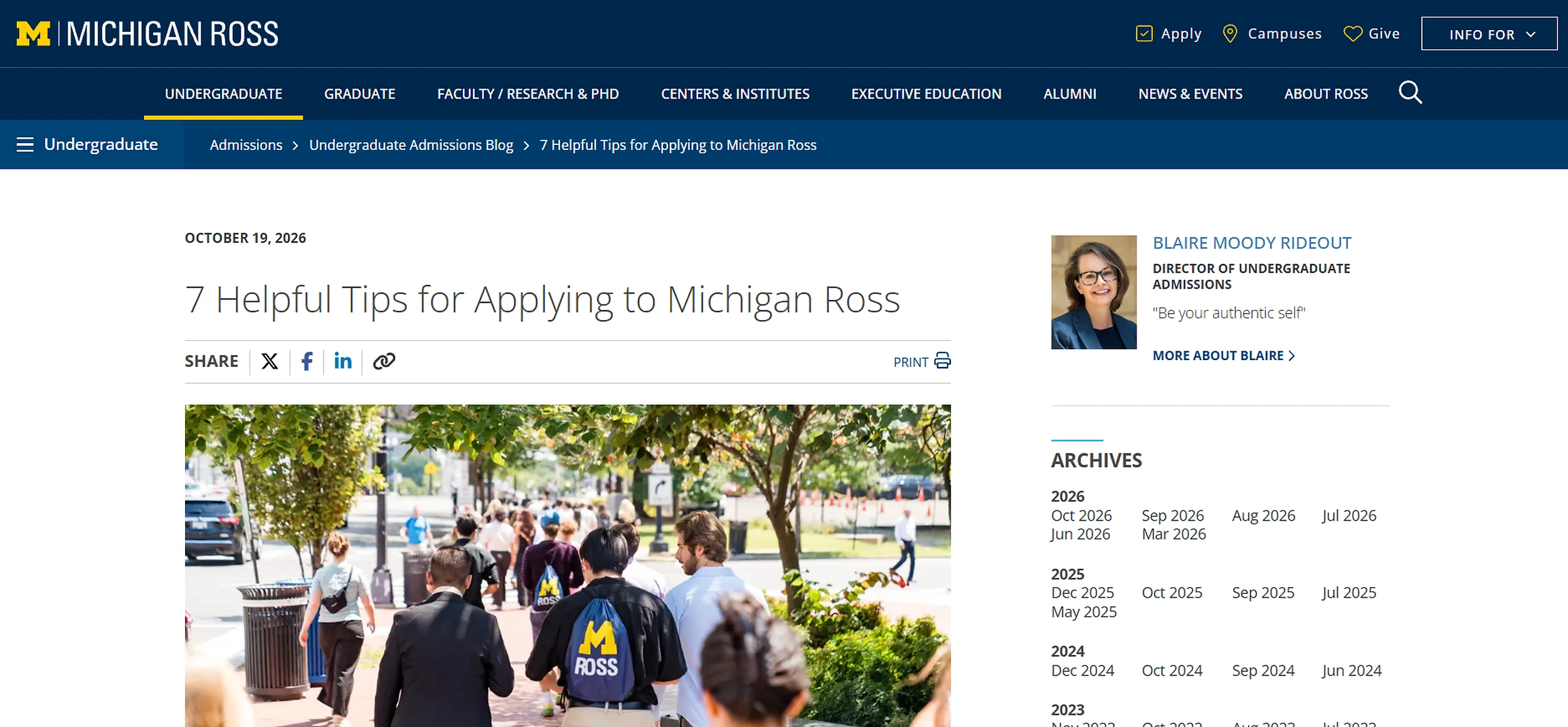
Michigan Ross provides a useful model for turning recurring admissions questions into content. Its Undergraduate Admissions Director publishes application guidance informed by the questions applicants and counsellors repeatedly raise, including how Ross reviews different components of the application. Schools can use the same approach by treating repeated admissions conversations as potential expert-led content topics.
Who Should Your School Interview for Each Type of Content?
The most appropriate contributor is not always the person with the highest academic qualification.
Effective content marketing for higher education starts by matching the expert to the student's question.
| Student Question | Recommended Expert |
|---|---|
| What will I learn in this program? | Instructor or program director |
| What skills do employers value? | Faculty, career services, or industry liaison |
| How should I prepare my application? | Admissions specialist |
| What makes a strong portfolio? | Faculty involved in portfolio assessment |
| What funding options are available? | Financial aid specialist |
| How do work placements operate? | Placement coordinator |
| What should international applicants prepare? | International admissions specialist |
| What academic preparation is helpful? | Instructor or program coordinator |
Some topics benefit from multiple perspectives. An article about work placements, for instance, might require a placement coordinator to explain the process and an instructor to describe how classroom learning prepares students for practical responsibilities.
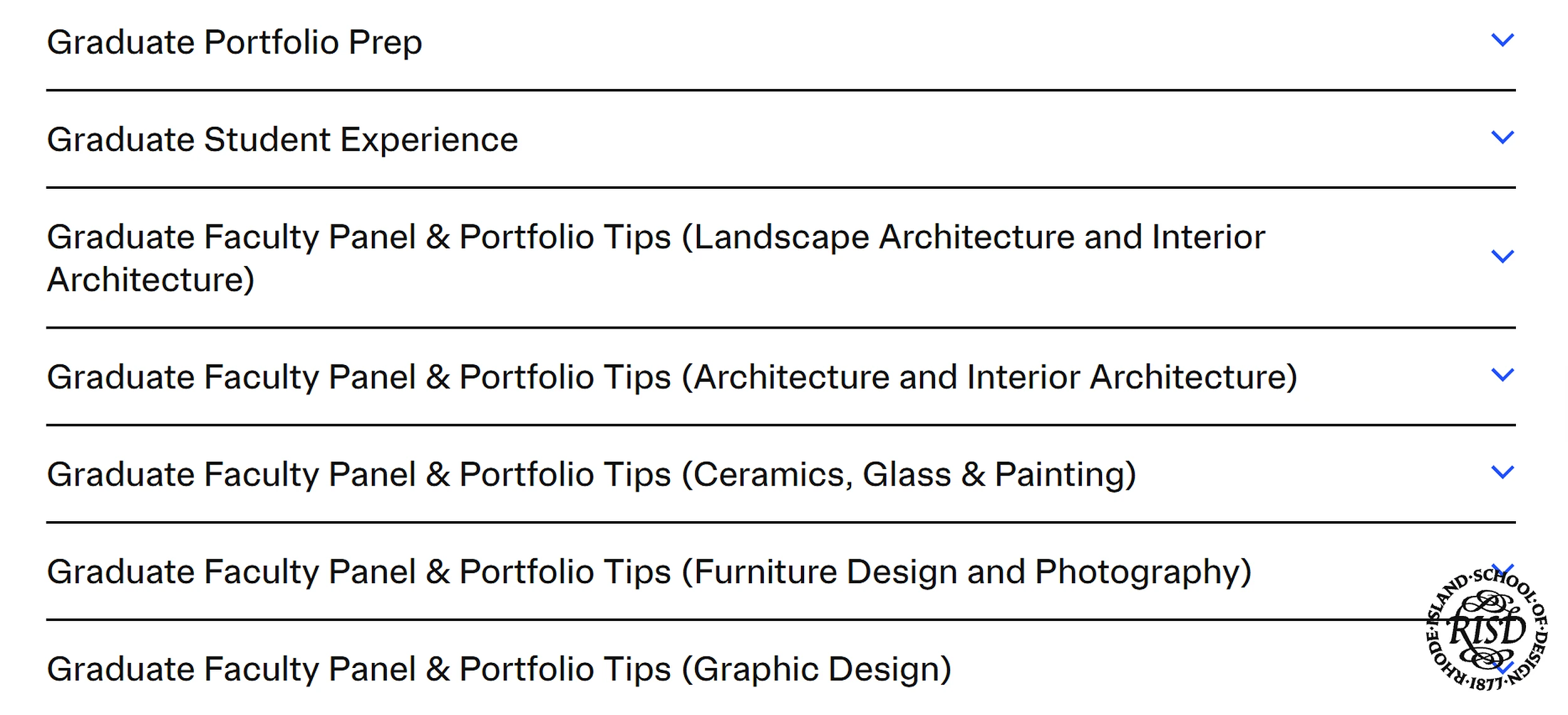
Rhode Island School of Design applies this principle to portfolio guidance. Its graduate admissions webinars bring admissions staff together with faculty from specific disciplines to explain portfolio expectations and answer applicant questions. Admissions can clarify process and submission requirements, while faculty provide discipline-specific insight into the work prospective students are preparing to present.
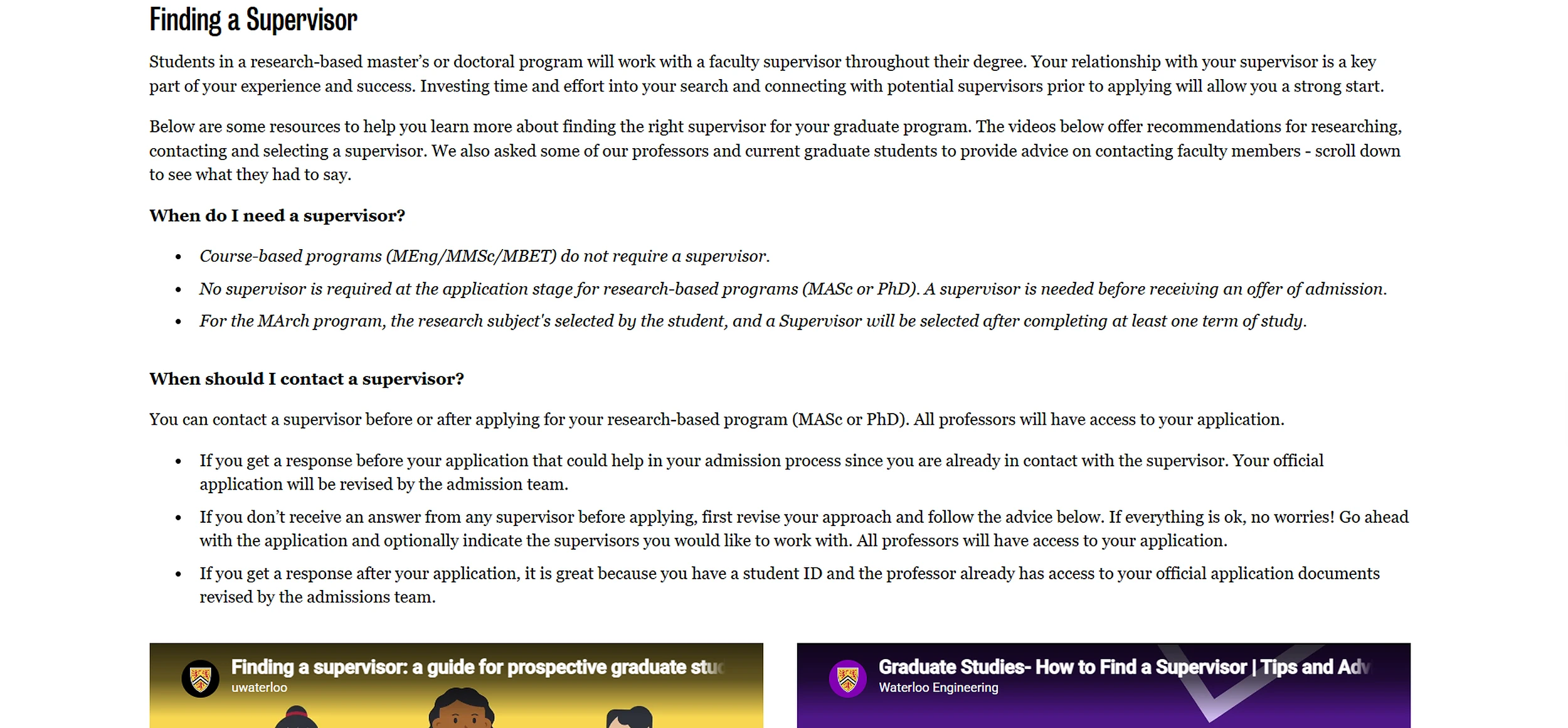
Waterloo Engineering uses a similar multi-perspective model in its guidance on finding a graduate supervisor. The university combines formal instructions with advice from professors and current graduate students, giving prospective applicants both the faculty perspective on credible outreach and the student perspective on navigating the process.
Marketing should establish each contributor's role before the interview to avoid conflicting or overlapping information.
These examples illustrate how institutional expertise can help students navigate decisions that generic recruitment content may not adequately address.
How Should Marketing Teams Interview Faculty Without Creating Extra Work?
Faculty participation becomes difficult when contributing to marketing content feels like another writing assignment. The marketing team should manage the editorial process. The expert should provide specialist knowledge.
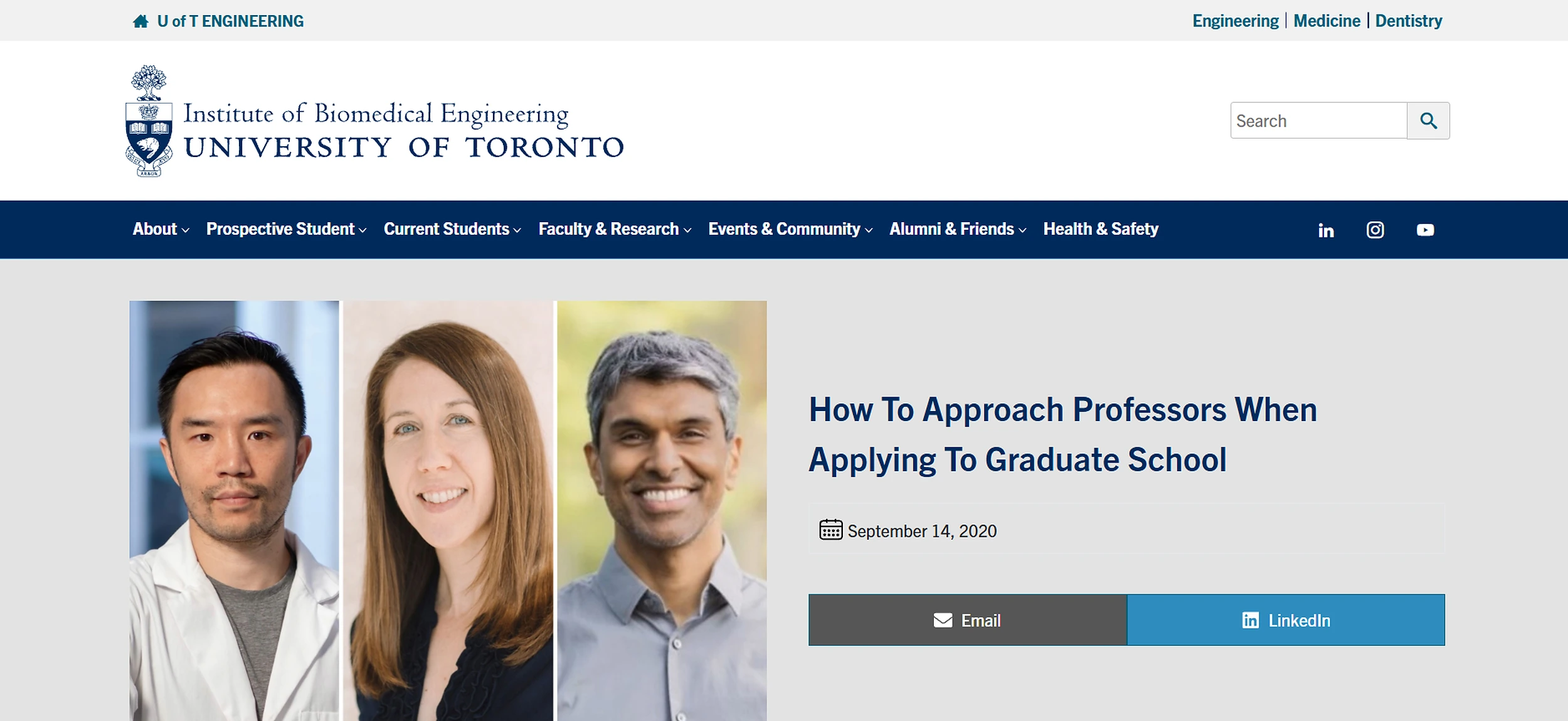
The University of Toronto's Institute of Biomedical Engineering demonstrates this approach through an interview with Professor Leo Chou about contacting potential graduate supervisors. The article uses focused questions about email structure, personalization, professional tone, and research fit, allowing the faculty member to contribute practical expertise without requiring him to write the full article. Chou also distinguishes his own preferences from universal admissions rules, helping preserve appropriate context around expert advice.
A practical interview workflow involves:
- Define the question: Choose one student concern the article will answer.
- Research existing information: Review program pages, admissions guidance, and relevant sources.
- Select the expert: Identify the person best positioned to address gaps.
- Prepare questions: Send five to seven focused questions in advance.
- Conduct the interview: Schedule approximately 20 to 30 minutes.
- Draft and verify: Marketing writes the article and checks factual claims.
- Request targeted review: Ask the expert to validate technical passages rather than edit the entire article.
A Short Faculty Interview Guide
Avoid broad prompts such as asking an instructor to describe their program. Instead, ask questions that reveal practical experience:
- What do prospective students commonly misunderstand about this subject?
- Which skills help students succeed during their first term?
- What has changed most in your field recently?
- Which concepts require the most explanation in your classroom?
- What skills or knowledge are employers increasingly discussing?
- What should applicants understand before choosing this program?
- What important student question does our website currently overlook?
A particularly valuable follow-up is:
Can you give me a specific example? Specific examples help distinguish original institutional insight from information that could appear on almost any school's website.
Make the Interview Easy to Participate In
Send the expert a short brief explaining the intended audience, article topic, interview length, and expected review responsibilities.
With permission, record the conversation or capture detailed notes. Mark potential quotations and identify any claims requiring additional verification.
If the expert mentions a classroom example involving students, remove identifying details unless appropriate publication consent has been obtained.
This preparation reduces follow-up requests and helps faculty participate without taking responsibility for the entire article.
How Do Schools Turn an Expert Interview Into Useful Content?
An interview provides source material, not a finished article. Faculty members naturally use terminology familiar to their discipline. Prospective students may be encountering those concepts for the first time. The writer's responsibility is to make the information accessible without removing its substance.
Consider this illustrative example:
Before Expert Input
Cybersecurity is a growing field requiring technical and problem-solving skills. Students learn to protect computer systems and networks from cyber threats.
The information is broad and offers limited guidance to someone considering the program.
After an Instructor Interview
Prospective cybersecurity students may assume their training will begin with advanced hacking techniques. However, introductory courses often focus on networking, operating systems, and structured troubleshooting. Understanding how systems normally function helps students recognize unusual activity and investigate potential security problems.
This example demonstrates how an interview might improve an article. It is not a quotation from an actual instructor or a description of a specific institution's curriculum.
The revised paragraph addresses a misconception, explains foundational learning, and gives students a clearer understanding of academic preparation.
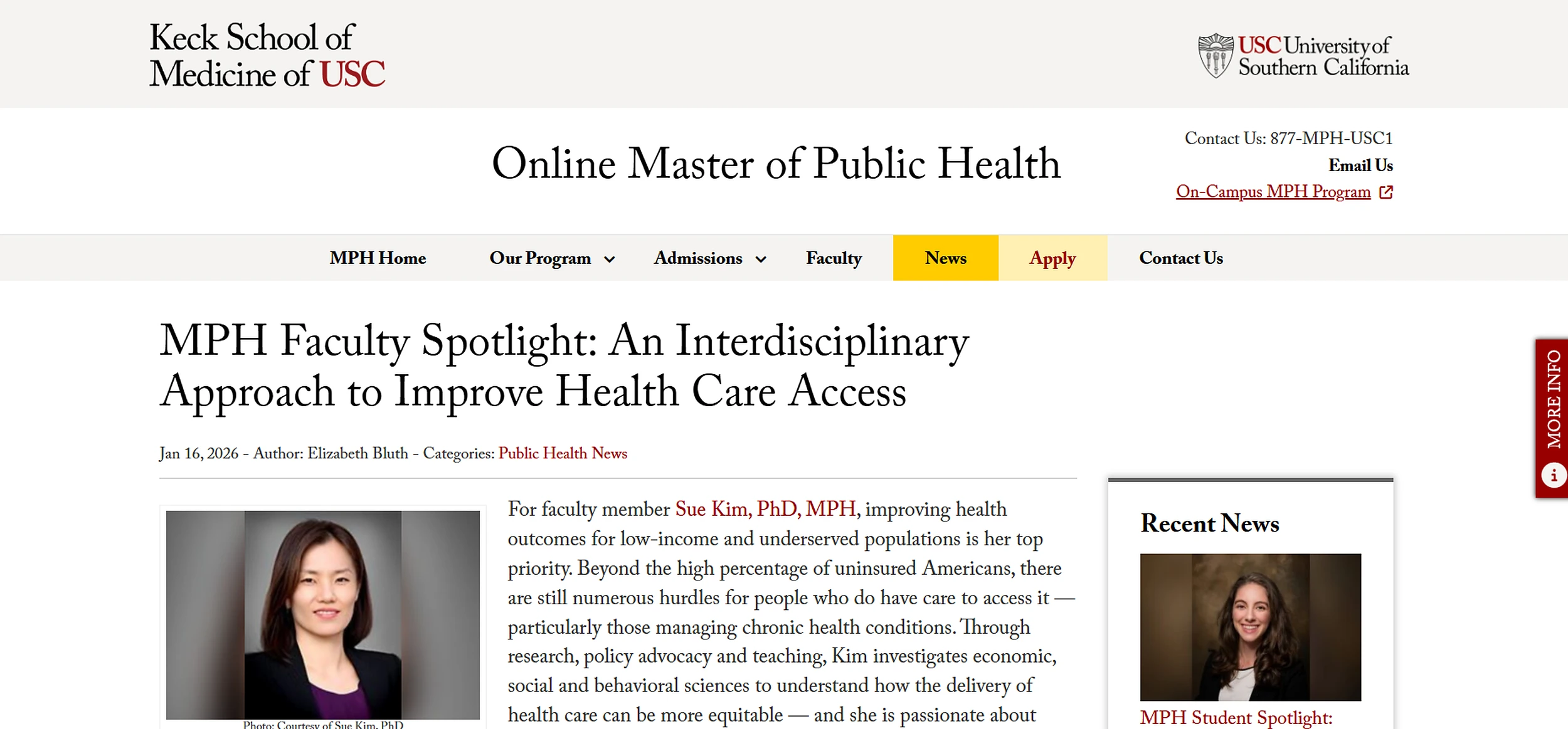
USC's online Master of Public Health provides a useful example of turning an expert interview into student-facing content. In a faculty spotlight, Associate Professor Sue Kim discusses her research and teaching but also explains qualities she sees in successful students and offers specific advice to prospective MPH applicants. The interview translates faculty experience into information students can use when evaluating their readiness and goals.
Preserve the Expert's Contribution During Editing
A useful approach is to identify the interview's strongest insight before drafting the blog post. Build the explanation around that insight, using the expert's example to clarify the student's question. Add institutional facts and supporting research where necessary.
Avoid turning qualified observations into absolute statements. If an instructor says some students struggle with networking concepts, the article should not claim that all incoming cybersecurity students lack networking knowledge.
The finished article should remain accurate, understandable, and recognizably informed by the contributor's experience.
What Evidence Should Support Expert-Led School Content?
Expert contributions strengthen an article, but they do not replace factual verification.
Schools should maintain a claim-to-evidence framework that distinguishes institutional facts, expert observations, and external research.
| Claim Type | Example | Appropriate Evidence |
|---|---|---|
| Program fact | The program includes a 12-week practicum | Official curriculum |
| Admissions requirement | Applicants need Grade 12 mathematics | Current admissions page |
| Expert observation | Students often underestimate networking fundamentals | Attributed instructor interview |
| Industry trend | Demand for a particular skill is increasing | Government or credible industry data |
| Career pathway | Graduates may pursue specified occupations | Program outcomes and occupational sources |
| Research finding | Research identifies a particular learning challenge | Original study or credible review |
| Student experience | Students complete practical client projects | Verified curriculum or documented activity |
This table can remain an internal editorial document. Its purpose is to ensure important claims have identifiable support before publication.
How Should Editors Handle Claims That Cannot Be Verified?
Not every statement needs a published study, but every material claim needs an appropriate basis.
A faculty observation can be valuable when clearly attributed and limited to the contributor's experience. A claim about national employment growth, however, requires credible external data. If evidence is unavailable, editors should qualify the statement, seek another source, or remove it.
This distinction is particularly important for claims involving employment outcomes, salaries, accreditation, and professional eligibility, where inaccurate information could influence significant student decisions.
Editorial Evidence Checklist
Before publishing, confirm:
- Program details match current official information.
- Admissions requirements, tuition, and intake dates are accurate.
- Statistics link to credible, preferably original sources.
- Career outcomes are appropriately qualified.
- Expert observations are attributed rather than presented as universal facts.
- Quotations accurately reflect what contributors said.
- Technical claims have received appropriate expert review.
- The article follows institutional terminology and Canadian English.
- A responsible person or department owns future updates.
This process helps prevent a common editorial problem: an article sounds authoritative because it features an expert, while outdated or unsupported claims remain elsewhere in the text. Credible higher education content requires both expertise and evidence.
How Should Schools Show Authorship and Expert Review?
Prospective students should understand who created the information and who is responsible for its accuracy. Google's people-first content guidance encourages accurate authorship information and relevant background about contributors.
Schools can apply this through several attribution models.
- Faculty-authored article: Identify the faculty member as the author, with relevant credentials and a faculty-profile link.
- Marketing article based on an interview: Credit the writer and identify the expert contributor. Example: Expert contribution by Dr. Jane Smith, Program Director, Cybersecurity.
- Academically reviewed article: Identify the reviewer and describe the scope of their contribution. Example: Reviewed for academic accuracy by Dr. Jane Smith, Program Director, Cybersecurity.
- Admissions guidance: Attribute responsibility to an admissions specialist, Registrar's Office, or appropriate department.
These examples are illustrative. Schools should never label an article expert-reviewed unless a qualified contributor has actually reviewed its relevant claims.
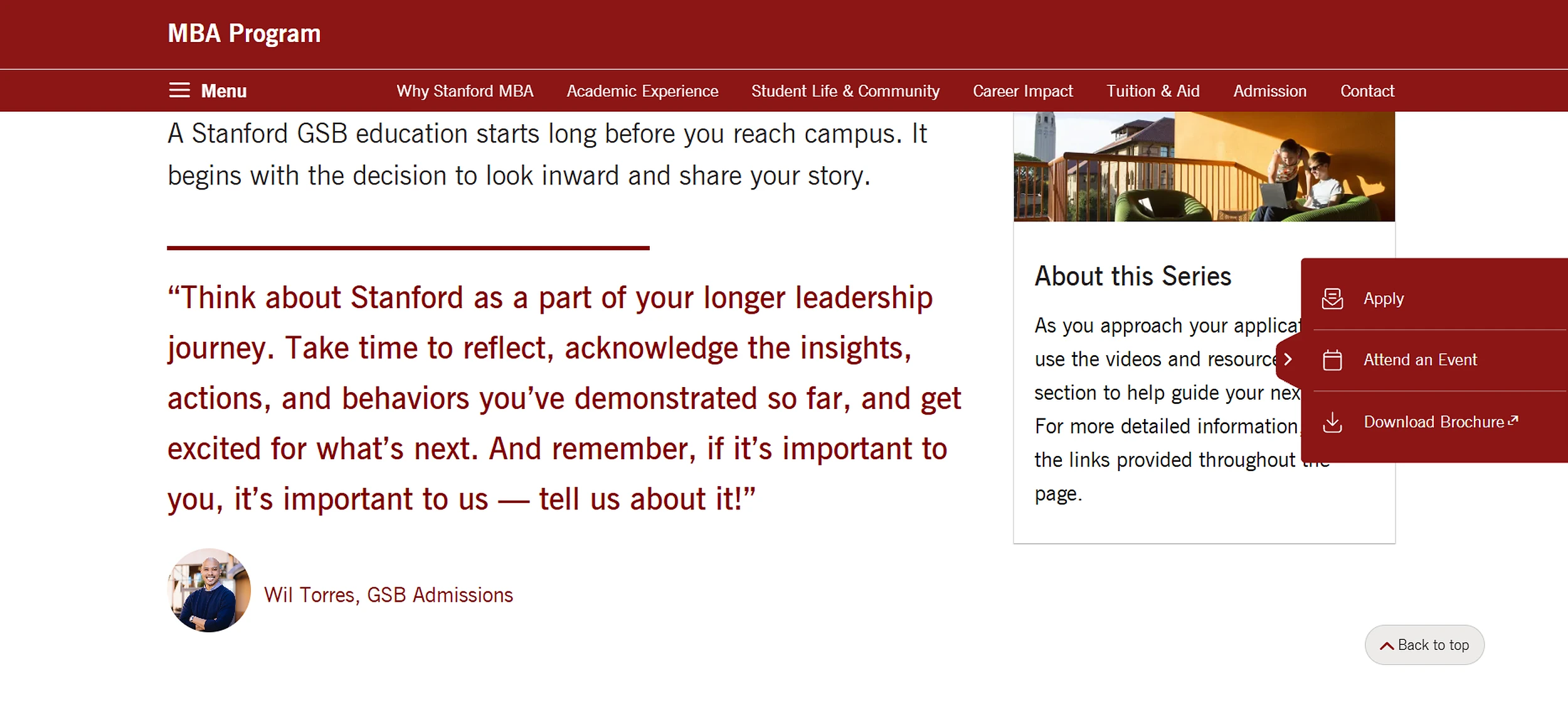
Stanford GSB's Application Essentials resource clearly separates institutional requirements from advice provided by admissions specialists. The page identifies Wil Torres from GSB Admissions and repeatedly labels interpretive sections “Notes from Admissions”, including guidance about education history, professional experience, resumes, recommendations, and essays. That gives the reader useful context about who is speaking and from what institutional role.
A visible publication date and meaningful review or update date can also help readers assess the currency of information.
How Does Expert-Led Content Support SEO and AI Search?
Expert-led content can strengthen a school's higher education content strategy by providing original information, transparent sourcing, and more precise answers to prospective students' questions.
These qualities align with Google's guidance on helpful, reliable content. Google's guidance for AI features in Search also emphasizes creating unique, valuable content rather than simply reproducing information already available online.
Faculty interviews can contribute:
- Original explanations and professional perspectives
- Practical examples from teaching or institutional operations
- Clearer answers to specialized student questions
- Verifiable claims supported by authoritative sources
- Transparent authorship and expert review
Why Does Clear Structure Matter?
Expertise is most useful when readers can find and understand it. Descriptive headings, direct answers, relevant examples, and clear explanations help prospective students navigate unfamiliar subjects.
For example, an article answering whether students need previous coding experience should address that question directly before explaining curriculum expectations or preparation resources. This structure also makes the page easier for search systems to interpret, although it does not guarantee inclusion in AI-generated answers.
Expert review does not guarantee higher rankings or AI search citations. Schools should therefore avoid treating expert attribution as an AI visibility shortcut.
A stronger AI Search content strategy prioritizes originality, accuracy, clear structure, and genuine student value. HEM's AI Search and SEO services for schools focus on improving institutional visibility and helping schools connect search discovery with student recruitment.
How Should Expert Content Connect Back to Program Pages?
Expert articles should support program discovery rather than become an isolated collection of faculty commentary.
Consider an article titled: What Skills Do Cybersecurity Students Need Before Starting College?
After answering the question, the article could guide students towards:
- The cybersecurity program page
- Curriculum and course descriptions
- Admissions prerequisites
- Related program comparisons
- Program guides or information sessions
- An inquiry or application page
The expert article provides context, while the official program page remains the authoritative source for credentials, tuition, delivery formats, and application requirements.
Make Internal Links Relevant to the Student's Next Decision
Links should follow naturally from the information presented. An article discussing academic preparation might direct readers to prerequisites or introductory course descriptions. An article explaining professional skills could connect to curriculum details or placement opportunities.
Avoid inserting multiple promotional links simply to increase clicks. The goal is to help students move from understanding a subject to evaluating whether a particular program meets their needs.
This complements a program-led topic cluster content strategy. Topic clusters organize related content around programs. Expert-led workflows improve the substance and credibility of individual articles within those pathways.
How Can Schools Maintain Expert-Led Content Over Time?
An expert-reviewed article can still become outdated. Curricula change, admissions requirements evolve, labour-market information shifts, and faculty members move into different roles. Schools should assign two forms of responsibility.
Editorial owner: Usually marketing or content management, responsible for readability, links, SEO elements, publication records, and scheduled reviews.
Subject-matter owner: The appropriate faculty member, admissions specialist, or department responsible for validating specialist information.
Reviews should be triggered when:
- Program requirements or curricula change
- Tuition, intakes, or application processes are updated
- Accreditation or professional standards change
- Referenced statistics become outdated
- The contributing expert changes roles
- A factual error is identified
Yale demonstrates why expert-led admissions content needs an update cycle. Its Inside the Yale Admissions Office podcast publishes recurring annual application updates in which admissions officers explain current requirements and changes to the process. In its 2026–27 update, the team also explains how experience with the previous application cycle informed the removal of its “why Yale” question and revisions to other short-answer prompts, showing how institutional expertise can be reviewed and refreshed rather than published once and left unchanged.
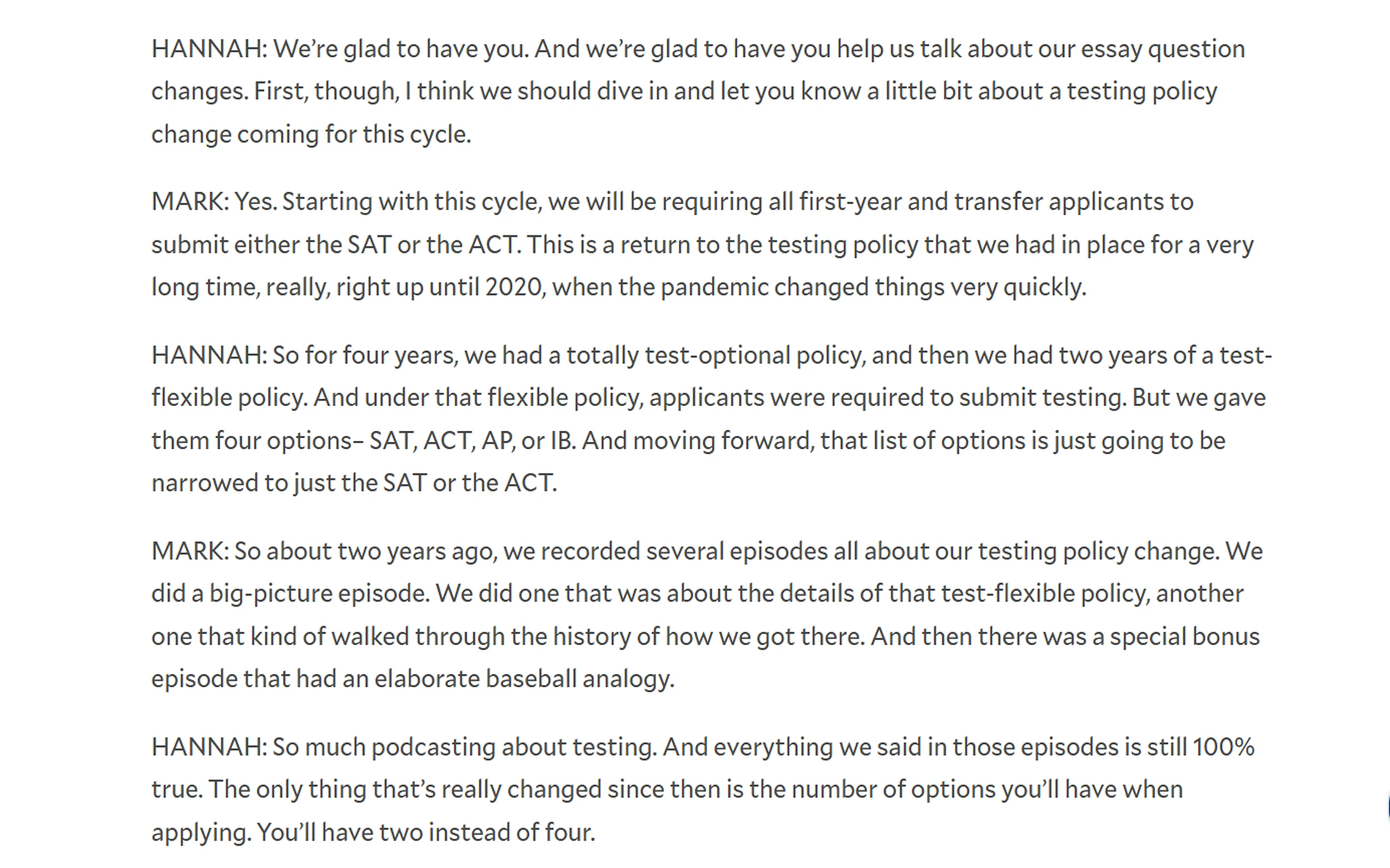
Screenshot and example refer specifically to Yale’s 2026–2027 application update.
Relatively stable articles might receive an annual review, while admissions and other frequently changing information may require more regular checks.
Use Expert Input to Improve Existing Articles
Schools can also improve existing content rather than commissioning entirely new articles. For example, an older article about business diploma career opportunities might benefit from instructor commentary, current occupational data, and career services insights.
The content team should identify which sections need stronger evidence, consult the appropriate specialist, and update the article without unnecessarily replacing information that remains accurate.
HEM's guide to refreshing higher education content explains the broader updating process. Expert interviews provide one practical way to improve the evidence and originality of existing pages.
A Practical Expert-Led Content Workflow for Schools
Schools can make this process repeatable through ten steps:
- Identify a genuine prospective-student question.
- Review the information already available.
- Select the appropriate institutional expert.
- Research the subject before the interview.
- Conduct a focused interview and request specific examples.
- Draft clear, student-centred content.
- Match important claims with supporting evidence.
- Obtain expert validation of specialist information.
- Record authorship, review responsibility, and update requirements.
- Connect the finished article to relevant program and admissions pages.
For larger content teams, a shared editorial tracker can record interview dates, contributors, outstanding evidence checks, approval status, and scheduled reviews. This makes expert-led production easier to coordinate across multiple programs without requiring a complex new system.
Final Thoughts: Turn Institutional Knowledge Into Useful Evidence
Schools already have valuable expertise within their academic and administrative teams. The opportunity is to make that knowledge accessible to prospective students.
Effective higher education content marketing starts with a meaningful student question, identifies the right expert, captures practical insights, verifies important claims, and presents the information clearly.
Transparent attribution and ongoing review help maintain credibility after publication. The result is more than another article built around a keyword. It is content that reflects the institution's actual knowledge and helps students better understand their educational options.
Is your school's content making the most of its expertise? Request a free student recruitment assessment to identify program and admissions content that could benefit from clearer evidence, stronger expert contributions, and improved search visibility.
Turn Faculty Expertise Into Content Students Can Trust
Build a clearer process for expert insight, evidence and review.
FAQ
What does E-E-A-T mean for higher education content?
E-E-A-T stands for experience, expertise, authoritativeness, and trustworthiness. For schools, it can mean creating accurate content using appropriate subject-matter experts, clear sourcing, transparent authorship, and evidence that supports important institutional, academic, and admissions claims.
Is E-E-A-T a direct Google ranking factor?
No. Google states that E-E-A-T itself is not one specific ranking factor. Its ranking systems use many signals, some of which can help identify content demonstrating experience, expertise, authoritativeness, and trustworthiness.
Who should review a school's program and admissions content?
The reviewer should match the subject. Academic and curriculum claims may require faculty or program leadership. Admissions requirements should be verified by admissions. Tuition and funding information may require finance or financial aid review. Marketing should retain editorial ownership.


